Fraud & Scam Awareness

Fraud is constantly evolving, and criminals are becoming more convincing than ever.
Scams can happen at any time, often when you least expect them. A simple text, phone call, or email can appear genuine, create a sense of urgency, and catch anyone off guard. That’s why staying alert is so important.
At Castlecomer Credit Union, our members come first. Below, you’ll find clear and practical advice to help you recognise scams, avoid fraud, and know exactly what to do if something doesn’t feel right.
We will never ask you to share your personal PIN or login details. You should never share this information with anyone.
I think I’ve been scammed – what should I do?
If you suspect you’ve been scammed or notice any unusual activity on your account, please contact Castlecomer Credit Union immediately.
Phone: 056 4441368 or 087 9544141
What Can I Look Out For?
Scams can take many forms, but they often share common tactics such as creating urgency, impersonating trusted organisations, or offering something that seems too good to be true.
- Messages about “frozen” or “on hold” accounts
Texts or emails claiming your account has been blocked, asking you to click a link to “review” or “unlock” it.
- Fake delivery or shopping emails
Messages pretending to be from delivery companies or online retailers, asking you to pay a small fee or “update your details”.
- Phone calls asking for security details
Callers posing as banks, credit unions, or other organisations, requesting PINs, passwords, or one-time passcodes.
- Impersonation of trusted organisations
Messages claiming to be from government bodies, utility providers, or financial institutions, asking for payments or personal information.
- Fake websites and social media ads
Online stores offering large discounts, but the goods never arrive or aren’t as described.
- Romance scams
Someone builds a relationship online and later asks for money due to an “emergency” or travel costs.
- Messages pretending to be family or friends
Text or WhatsApp messages claiming a phone is “lost” or “broken”, urgently asking for money.
Common Types of Scams
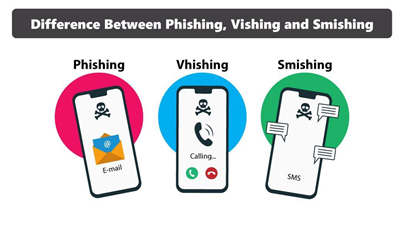
Phishing Emails
Fraudulent emails designed to look like they come from trusted organisations such as banks, delivery companies, or service providers. They often ask you to click a link, download an attachment, or provide personal information. These emails may create urgency or fear to prompt quick action.
Smishing Texts
Scam messages sent by text that appear to be from legitimate sources. They often include links to fake websites or request sensitive information. Common examples include delivery issues, account alerts, or urgent payment requests.
Vishing Calls
Fraudulent phone calls where scammers pose as representatives from banks, credit unions, or other organisations. They may claim there is an issue with your account and try to persuade you to share personal or security details.
What Should You Do If You Suspect Fraud?
If you think you clicked on something or gave information. Don’t panic just get in touch with us as soon as you can. The sooner we know, the faster we can secure your account. We’re here to help you stay safe. Looking out for our members is at the heart of what we do. If you ever get a message, email or call and you’re not sure about it, please reach out. We’re always happy to take a look and put your mind at ease.
| Call Us: | 056 4441368 or 087 9544141 |
| Visit Us: | 86 Kilkenny Street Castlecomer Co. Kilkenny R95 EY40 |
| Email Us: | info@castlecomercu.ie |